
Postpartum Exercise Timeline: When It’s Safe to Return to Running, Lifting, and HIIT
Many new moms ask, “When can I exercise after birth?” A common question that often comes with a mix of emotions. You may be eager to get back to the workouts you loved before pregnancy, reconnect with your body, or simply feel strong and energized again. While movement can be incredibly beneficial during the postpartum period, returning to exercise is not about rushing back into your old routine. It’s about giving your new body the time, support, and progression it needs to heal and rebuild.
Pregnancy and birth create significant changes throughout your body. Your hormones shift, your muscles and connective tissues adapt, and your abdominal wall and pelvic floor go through tremendous stress and strain. Whether you delivered vaginally or by C-section, your body has experienced a major physical event and deserves a thoughtful recovery process. I don’t like word “safe” for postpartum exercises. There are no good or bad exercises. But there are exercises best for your body at a specific time.
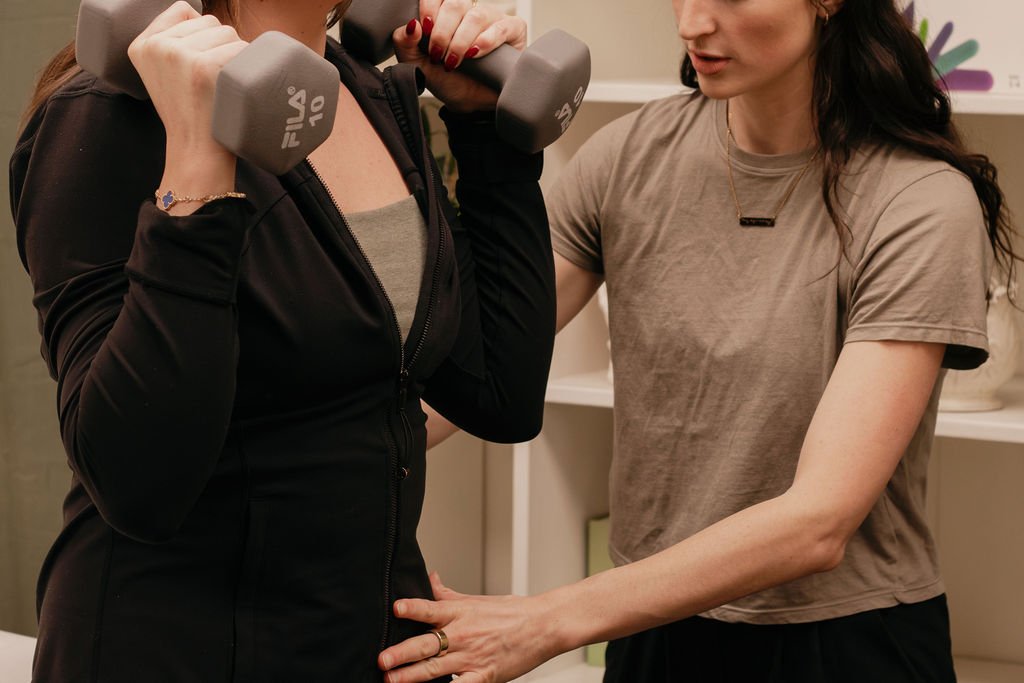
Women doing safe postpartum core exercises in phase 2 rebuild stage
Your core and pelvic floor are especially important during postpartum healing. These muscles work together to support your spine, stabilize your body, control pressure inside your abdomen, and help you move confidently through everyday activities. After pregnancy and birth, they may need time to restore strength, coordination, and endurance before returning to more intense forms of exercise.
Returning to high-impact exercise too soon, such as running, jumping, heavy lifting, or intense HIIT workouts can place extra stress on healing tissues. For some women, this may contribute to symptoms like urinary leaking, pelvic pressure, heaviness, discomfort, pelvic organ prolapse symptoms, or pain with movement.
The goal of postpartum exercise is not simply to “get back” to where you were before pregnancy. It’s an opportunity to rebuild a stronger foundation that supports everything you want to do moving forward.
The Three Phases of Postpartum Exercise: Restore, Rebuild, and Reclaim
A safe postpartum pelvic floor workout plan with Women’s Pelvic Health & Wellness typically focuses on three important phases: Restore, Rebuild, and Reclaim. Every woman’s timeline is different, and your recovery may depend on factors like your birth experience, previous activity level, pregnancy changes, and any symptoms you may be experiencing.
Phase 1: Restore
Early postpartum recovery (starting as early as 2 weeks) is focused on gentle movement, healing, and reconnecting with your body. This phase is about restoring communication between your brain, core, and pelvic floor.
Some helpful activities during this stage may include:
Gentle walking
Deep breathing exercises
Pelvic floor relaxation and coordination
Gentle core activation
Mobility exercises
Postpartum recovery is not just about strengthening. Learning how to relax and coordinate your pelvic floor is just as important as building strength.
Phase 2: Rebuild
As your body continues to heal, you can gradually begin rebuilding strength and stability. This phase focuses on improving your ability to handle everyday movements and increasing your physical capacity.
Postpartum exercises may include:
Core strengthening exercises
Pelvic floor strengthening and coordination
Hip and glute strengthening
Functional movements like squats, lunges, and lifting techniques
Exercises that improve posture and stability
The focus should be on quality of movement rather than simply doing more repetitions or increasing intensity quickly.
Phase 3: Reclaim
The final phase is about returning to the activities you love with confidence. Whether your goal is running, strength training, sports, hiking, or high-intensity workouts, your body needs a gradual progression to prepare for those demands.
Higher-impact activities like running, jumping, and heavier lifting should come after your body has rebuilt the strength, coordination, and control needed to handle those movements.
A successful return to exercise means feeling strong, supported, and confident. Not simply checking a box that you are “back.”
Listen to Your Body: Signs You May Need More Support
Your body communicates with you throughout the postpartum recovery process. If you notice certain symptoms during or after exercise, it may be a sign that your body needs a different approach or additional support before increasing intensity.
Watch for signs like:
Urine leaking during exercise or daily activities
Pelvic pressure, heaviness, or a feeling of something “falling down”
Pain during or after activity
Abdominal coning or doming during core exercises
Increased symptoms after workouts
Feeling unable to control your movements or maintain proper form
These symptoms are common, but they are not something you simply have to accept as part of motherhood. They are valuable signals that can help guide your recovery.
The Importance of Pelvic Floor Health After Pregnancy
The relationship between pelvic floor health and exercise postpartum is an important part of long-term recovery. Your pelvic floor plays a role in bladder and bowel control, sexual health, core stability, and overall movement.
A strong and coordinated pelvic floor can help you:
Feel more confident during exercise
Return to activities you enjoy
Support your core and spine
Move without fear of leaking or discomfort
Build strength for the demands of motherhood and daily life
Postpartum recovery is not about doing more, faster. It’s about doing the right things at the right time for your body.
Getting Support for Your Postpartum Recovery
Every postpartum journey is unique. If you’re unsure where to start, feeling frustrated by symptoms, or want guidance on safely returning to exercise, Women's Pelvic Health & Wellness can help.
A personalized postpartum evaluation can identify your specific needs and create a plan designed around your goals, your body, and your lifestyle. With the right support, you can rebuild strength, improve confidence, and return to the activities you love.
Your body has done something incredible. It deserves the time, care, and support needed to feel strong again.
FAQ’s
When can I start exercising after birth?
Gentle movement, such as walking and breathing exercises, can often begin within the first few days after birth if you feel comfortable. More intense exercise should be added gradually and only if you are not experiencing pain, pressure, heaviness, or leaking.
Is it normal to leak during workouts?
Leaking during exercise is common after pregnancy and birth, but it is not something you have to accept as normal. Pelvic floor therapy can help identify the cause and improve your ability to exercise without leaking.
What if I had a c- section? When can I start exercise?
We start exercises as soon as 2 weeks! The earlier, the better. We will gradually increase exercise and intensity based on how your incision, care and pelvic floor are feeling.
Do I really need pelvic floor PT or can I do kegels at home?
Kegels can sometimes helpful, but they are not for everyone. A pelvic floor therapist can determine whether you need strengthening, relaxation, coordination, or a combination of these.