
Why a Holistic Pelvic Floor Therapist May Be the Missing Piece
When most people hear “pelvic floor therapy,” they think of Kegels.
But your pelvic floor is not just a group of muscles. It’s connected to your breath, your nervous system, your posture, your birth experience, your stress levels, and your daily life.
This is where a holistic approach makes all the difference.
If you’re pregnant, postpartum, or experiencing pelvic pain, incontinence, or discomfort, working with a holistic pelvic floor therapist may be the missing piece in your healing and preparation.
What Does “Holistic” Pelvic Floor Therapy Mean?
Holistic pelvic floor therapy looks at the whole person, not just the pelvis.
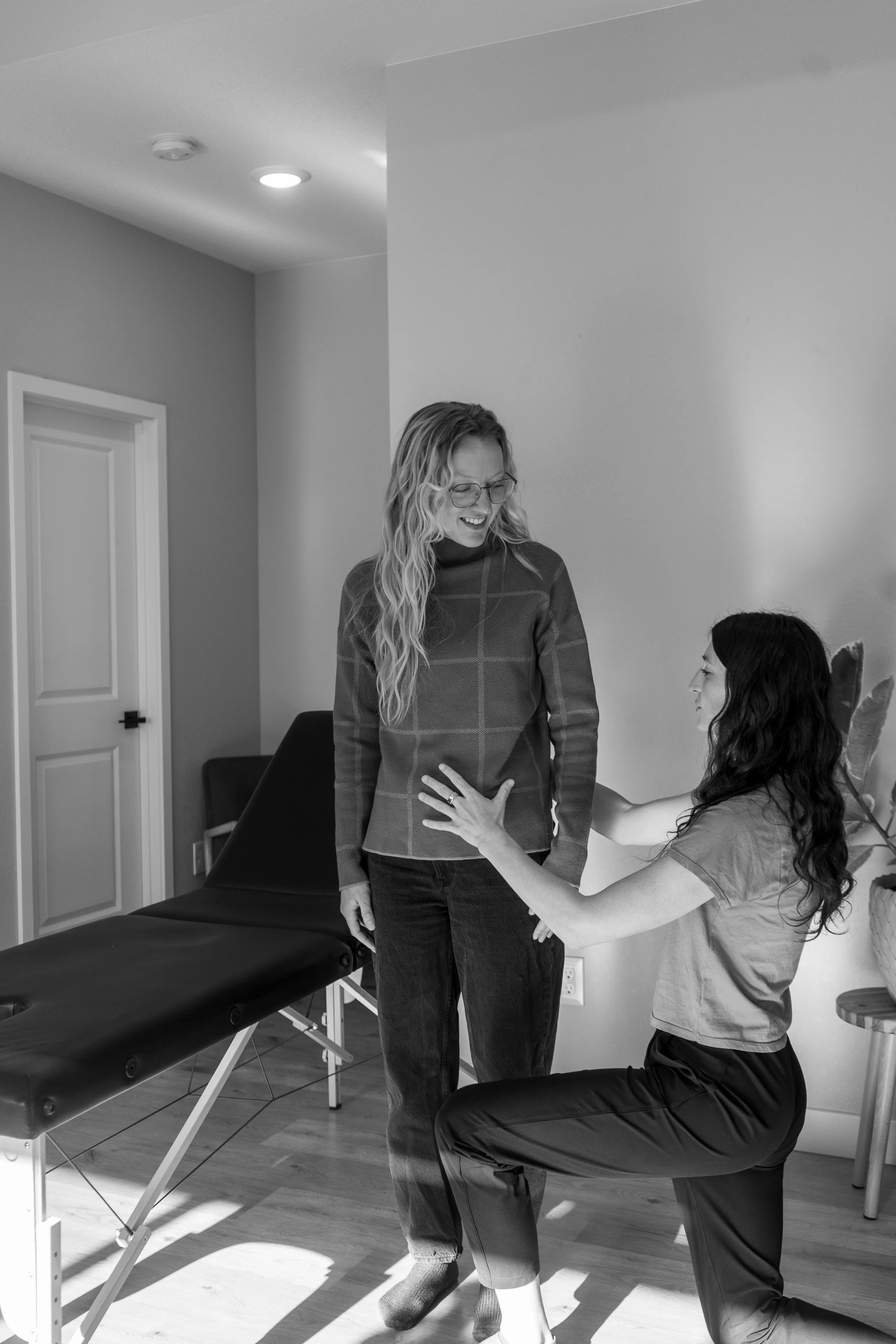
Your pelvic floor responds to:
How you breathe
How you move
How you lift
Your stress levels
Your birth history
Trauma history
Your daily responsibilities
If your nervous system is constantly stressed, your pelvic floor may stay tight and guarded. If your breathing is shallow, your core system cannot coordinate effectively. If you lift toddlers, car seats, laundry baskets, and groceries daily, your pelvic floor must function dynamically — not just contract on command.
Pelvic floor dysfunction is often about coordination and regulation, not just weakness.
Women’s Health Occupational Therapy: A Whole-Body Approach
Occupational therapy brings a unique perspective to pelvic floor therapy.
While both occupational therapists and physical therapists can treat pelvic floor dysfunction, occupational therapy focuses deeply on how your body functions in your real, everyday life.
That means we look at:
How you care for your baby
How you return to exercise
How you sit at work
How you manage stress
How pelvic symptoms impact intimacy
How your environment supports or strains your body
Occupational therapy bridges the gap between rehabilitation and real life. It’s not just about strengthening a muscle. It’s about helping you confidently move through motherhood, pregnancy, and daily life without fear or limitation.
Why a Holistic Approach Matters During Pregnancy & Postpartum
Pelvic floor therapy during pregnancy and postpartum isn’t about controlling birth.
It’s about preparing your body to work with it and supporting healing afterward.
Pregnancy changes everything:
Your posture shifts
Your hormones are constantly changing
Your breathing mechanics change
Your nervous system becomes more sensitive.
These changes influence how your pelvic floor functions long before labor begins.
After birth:
Your body begins healing
Tissues repair
Hormones shift
Sleep becomes fragmented
Stress levels often increase
New physical demands begin (feeding, lifting, carrying)
Your pelvic floor responds to all of it. A holistic approach supports your body before birth and continues to guide recovery long after delivery.
Support may include:
Functional strength training that prepares you for labor and motherhood
Education on pushing mechanics and labor positions
Hip and pelvic mobility work
Breath and core coordination
Nervous system regulation strategies
Early postpartum recovery planning
Gradual return-to-movement guidance
Healing isn’t only about strengthening. It’s about restoring coordination between your breath, core, pelvic floor, and nervous system.
When the whole system is supported, your body can adapt, recover, and move forward with more confidence and less fear.
Who Is Holistic Pelvic Floor Therapy For?
A whole-body approach may be right for you if you:
Are pregnant and want to prepare intentionally for birth
Have leaking, pressure, or pelvic pain
Experience pain with intimacy
Want to return to exercise safely
Have had a traumatic birth
Feel dismissed or told “this is just normal”
Common does not mean normal.
The Missing Piece
Pelvic floor dysfunction is rarely just about weakness.
It’s often about coordination.
Breath.
Stress.
Habits.
Lifestyle.
And how your body responds to change.
Holistic Pelvic Floor Therapy in South Denver
If you’re looking for holistic pelvic floor therapy in Denver, Englewood, Littleton, Centennial, or Highlands Ranch, Women’s Pelvic Health & Wellness offers one-on-one, individualized care designed to support the whole person.